DANIEL HERBERT ANTHON DSO, MC and bar., m.i.d.
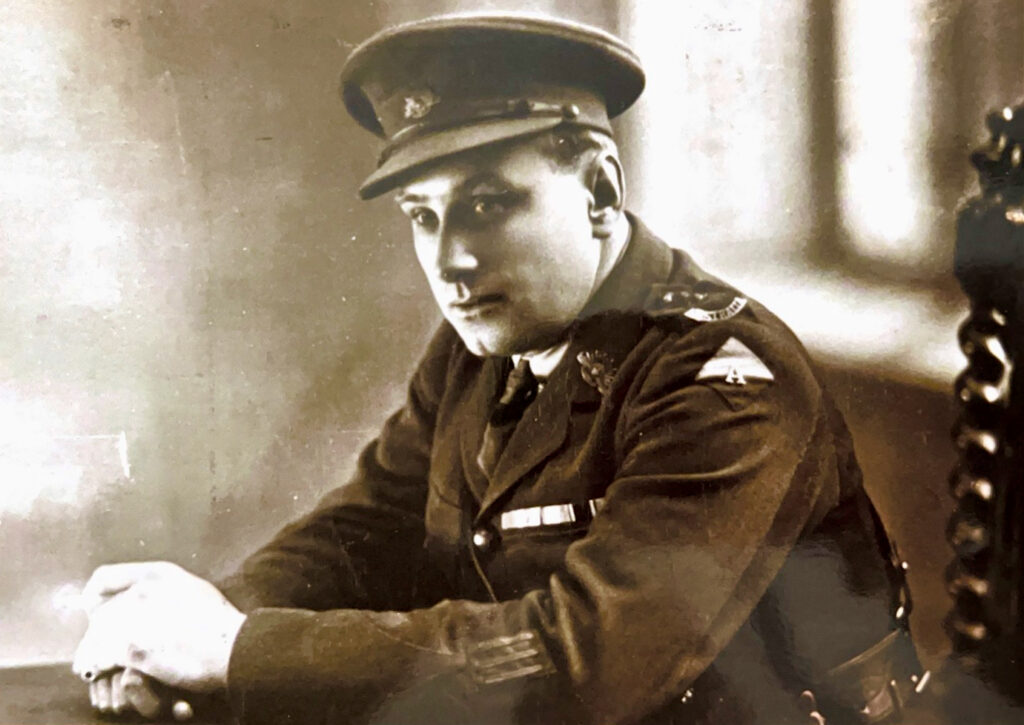
Edited: J.B. Hopley. (*)
Printed in “Despatch”, Monthly Journal of the New South Wales Military Historical SocietyVolume XIII No. 3, September 1977, pp39-43
Daniel Herbert Anthon was born at Petersham, NSW, on 9th August 1890, the son of Danish master mariner Daniel Christopher Anthon and his wife Eliza Alice, nee Brown. He had a primary school education and then worked as a clerk, and from 1912 t o 1914 he was employed in Port Moresby by Burns, Philp and Co. Lt d., merchants, ship owners and shipping agents .
He enlisted in the Australian Imperial Force at Liverpool, NSW, on 3rd May 1915 and was posted, as a signaller, to the 20th Battalion, his regimental number being 19. The 20th Battalion, together with the 17th, 18th, 19th Battalions – all four having been raised in NSW – formed the 5th Brigade. This was one of two infantry brigades (the other was the 6th) and one light horse brigade (the 4th) raised following acceptance by the British Government of an offer by the Commonwealth Government to organise, despatch and maintain fresh units of a strength of 10,000. A subsequent offer resulted in the raising of of the 7th Infantry Brigade. The thee new infantry brigades were later combined when in Egypt, with certain additional units, to form the 2nd Australian Division.
The brigade began to sail from Australia in May 1915, their last units leaving in June. Anthon embarked on the Troopship “Berrima” at Sydney on 25th June. He was then a private in A Company of his Battalion.
As units arrived in Egypt they were moved to the camping-grounds of their respective brigades outside Cairo where training continued under their own officers and the staff of Major-General J Spens CB, CMG, who had been sent out from the UK by Lord Kitchener to assist in the training of Australian and New Zealand troops. The 5th and 6th Brigades went into Aerodrome Camp on the north-east outskirts of Heliopolis, about five miles from the centre of Cairo.
From Egypt the 20th Battalion moved to Gallipoli, landing at Anzac on 22nd August and from 26th August they began to take over from the 3rd Light Horse Brigade the trenches facing The Nek. As at 8th September the infantry of the 5th Brigade was disposed as follows:
20th Battalion – Russell’s Top
19th Battalion – Pope’s
17th Battalion – Quinn’s
18th Battalion – in reserve
The 20th served at Russell’s Top until the evacuation 18th and 19th December, Anthon being among the last to leave. From Mudros they returned to Egypt, arriving at Tel-el-Kebir on 10th January 1916, and on 18th March they embarked at Alexandria for the Western Front disembarking at Marseilles on 25th March and arriving Steenbecque on the 28th. Meanwhile Anthon had been promoted to corporal, on 17th March.
In August 1916, during the Battle of the Somme, Anthon was wounded, at Poziedres – the first of three wounds he received in action. He did not rejoin his unit until November. Promoted sergeant on 20th December, he was selected for officer training, attending Officer Cadet Battalion at Oxford, England, from 8th March 1917 and being commissioned Second Lieutenant 28 June. After commissioning he rejoined the 20th Battalion.
It was during the Battle of Benin Road (Third Ypres) 20th to 25th September 1917 that Anthon received his second wound. He remained on duty, and for great initiative in superintending the work of consolidating after the battalion’s objective had been gained at Hannebeek Wood he was awarded the Military Cross. The restrained formal language of the official citation contrasts strongly with the description of the action contained in the Official War History:
“While the thin protection barrage covered the digging-in and the heavy-artillery barrage wandered into the enemy’s back area, there occurred in the left (5th Brigade) sub-sector an incident which was to be constantly repeated in this step-by-step fighting. Some 200 yards beyond the Hannebeek and ahead of the right of the 20th Battalion, lay two loop-holed pillboxes which, though not included in the objective, were too close to be thoroughly smothered by the barrage. The garrisons of these now fired with impunity on the Australians digging in, and, as they would obviously endanger the next advance, it was at once recognised that the only safe source was to seize them at once. The leaders on the spot forthwith attacked them although in order to do so, it was necessary to enter the fringe of the protective barrage. Captain Appleby of the 18th and Sergeant Nippers were killed, but Lieutenant Anthon of the 20th, who with four men had penetrated to the rear of the place, captured it, routing 40 germans and a machine gun.”
Promoted Lieutenant 16th October 1917, Anthon was wounded for the third time on 11th March 1918, AIF activity on the Western Front at that time being trench raids and patrols.
It was for his work near Clery-sur-Somme on 30th August 1918, during the attack on Mont St. Quentin, that Anthon was awarded the Distinguished Service Order. His citation tells that:
“…he advanced at the head of a few men against a strongly held machine-gun post, which, after bombing, he charged alone, capturing seven men and the gun. He then, by a flanking movement, captured a trench taking 54 prisoners, besides killing and wounding several others. This gallant action allowed the battalion, which had been held up for some time, to advance”
In action near Bearevoir during the attack on the Hindenburg Line, 3rd October 1918, Lieutenant Anthon, under heavy machine-gun and rifle fire, charged single-handed a farm held by a number of Germans. He carried out a bombing attack which forced the enemy to evacuate the farm, leaving their machine-guns behind. The capture of this post undoubtedly saved numerous casualties to the attacking Australian troops and Anthon was awarded a bar his Military Cross for this exploit.
Anthon’s last decoration for his service in the first World War was a mention in despatches. Appointed Adjutant of the 20th Battalion on 21st March 1919, Anthon returned to Australia on the Miltiades in June that year and his appointment to the AIF terminated on 11th October.
On 1st July 1920, Anthon was appointed Lieutenant in the Reserve of Officers, 2nd Military District. He was later, 12th November 1936, appointed to the 53/3rd Battalion, and on 1st August 1937 to the 3rd Battalion (The Werriwa Regiment), still in the rank of Lieutenant. In the 3rd Battalion he was posted to A Company which was based in the Bowral-Moss Vale-Mittagong area of N.S.W. He transferred back to the Reserve of Officers on 9th August 1938.
Following the outbreak of the second World War Anthon began active duty on 14th October 1939 as a Lieutenant with the 2nd Australian Garrison Battalion, his regimental number being N60017. Promoted Captain 27th May 1940, Anthon was appointed Adjutant 13th Australian Garrison Battalion 4th November 1940. From 1st July 1941 he was Officer Commanding Detention Barracks, Holsworthy, being transferred to the Australian Army Military Prison and Detention Barrack Service 14th May 1943 by which time he held the rank of Major (effective 8th May 1942). It is reported that while he demanded a rigid standard of discipline from the soldiers in his charge in detention, he was regarded as a fair man.
Major Anthon was awarded the Efficiency Decoration in 1946 and ceased active duty 25th June 1948.
After leaving the army following the first World War An then took up farming at Wildes Meadow, NSW, from 1922 to 1928, and was later employed by Southern Portland Cement Ltd at Berrima. During the years between the two World Wars he was active in local community affairs. Among his many interests he was a Justice of the Peace; President, Moss Vale Sub-branch, returned Sailor’s and Soldier’s Imperial League of Australia 1934-35; an organiser of soup kitchens during the “depression” period; a member of the Boy Scouts committee; an adviser to the Moss vale Junior Farmer’s organisation; a church warden at Holy Trinity, Berrima and St. John’s, Moss Vale; a member of the District Ambulance Board for 15 years (later being made a life member); and lodge secretary Manchester Unity Independent Order of Oddfellows.
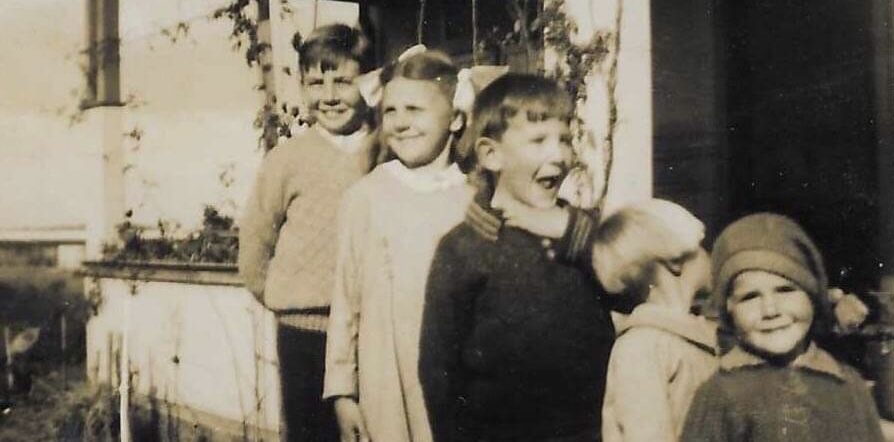
Anthon had married in 1922 and had five children. He died of a heart condition at his home at Moss Vale on 4th September 1951, being survived by his wife, two sons and two daughters. After a service in St. John’s he was buried in the Anglican cemetery at Moss Vale.
NOTE:
- this is an expanded version of an article submitted to the Australian Dictionary of Biography (The Australian National University). The article will appear in Volume 7, which is planned for publication early 1979.
GAZETTAL OF AWARDS
London Gazette (Supplement):
01.01.1918 – MC
01.02.1919 – DSO
07.03.1919 – Bar to MC
11.07.1919 – Mention in despatches
Commonwealth of Australia Gazette:
No. 187, 03.10.1946 – ED
SOURCES
C.E.W. Bean, The official History of Australia in the War of 1914-1918,
Vols IV and VI.
War Diary of the 20th Battalion (Australian War Memorial).
Information from Mr. F.S. Anthon, Moss Vale.